Microwave Treatment vs. Chemical Pesticides: Which Wins?
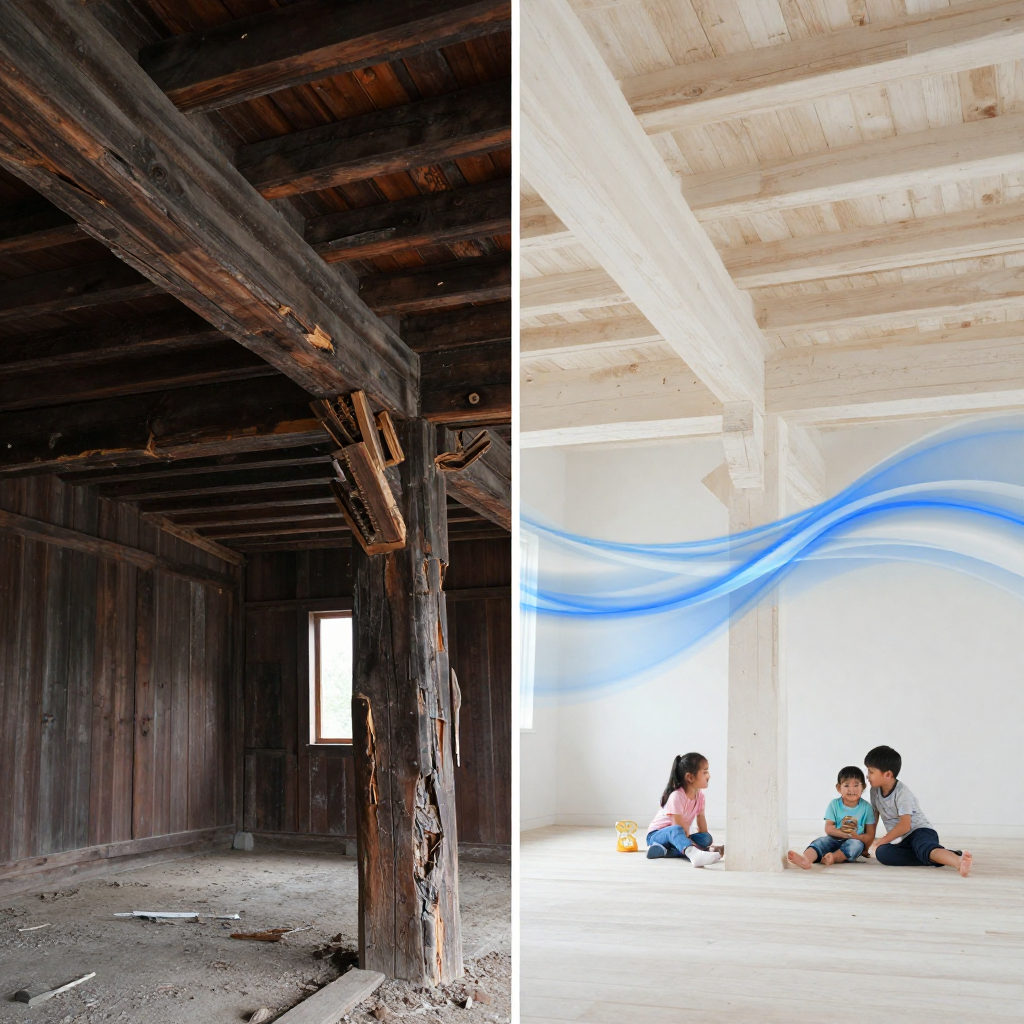
When a woodworm infestation is discovered, one of the first questions homeowners ask is, “What’s the best way to get rid of it?” For decades, chemical pesticides have been the standard solution for treating wood-boring insects. While they continue to play a role in pest management, advances in technology have introduced new methods that are changing how timber is protected.
Among the most significant innovations is microwave treatment, a chemical-free approach that targets wood-boring insects hidden deep inside timber. Rather than relying on toxic substances, it uses controlled non-ionizing microwave energy to eliminate active pests. Shashel has helped bring this technology to homeowners, restoration professionals, and conservation specialists seeking a modern solution for protecting valuable wooden structures.
So, when comparing microwave treatment and chemical pesticides, which approach comes out on top? The answer depends on the building, the infestation, and the goals of the property owner. Understanding how each method works makes it easier to choose the most suitable solution.
Understanding Chemical Pesticides
Chemical pesticides have been used for many years to control wood-boring beetles.
Most products are applied by:
- Brushing
- Spraying
- Injecting
- Surface coating
These treatments are designed to kill insects that come into contact with the active ingredients and may also help discourage new infestations in treated areas.
They remain widely used because they are familiar, readily available, and can be effective in many situations when applied correctly.
How Microwave Treatment Works
Microwave treatment takes a very different approach.
Instead of relying on chemicals, Shashel uses carefully controlled non-ionizing microwave energy.
As the energy passes through the timber, it interacts primarily with moisture inside living insects.
Because woodworm larvae contain considerably more moisture than seasoned wood, they absorb microwave energy more efficiently. Their internal temperature rises until they reach a level they cannot survive.
This process can eliminate:
- Eggs
- Larvae
- Pupae
- Adult beetles within the treated area
The treatment is carried out without applying pesticides or fumigants to the wood.
Comparing the Two Approaches
Although both methods aim to eliminate wood-boring insects, they work in fundamentally different ways.
1. Treatment Method
Chemical Pesticides
- Use insecticidal compounds.
- Depend on active chemical ingredients.
- Usually require application to the wood surface.
Shashel Microwave Technology
- Uses non-ionizing microwave energy.
- Does not rely on pesticides.
- Targets insects hidden inside the timber.
2. Chemical Exposure
One of the biggest differences is the use of chemicals.
Traditional pesticides introduce chemical substances to the treated wood.
Microwave treatment requires:
- No pesticides
- No fumigants
- No toxic preservatives
For many homeowners, this chemical-free approach is an important advantage.
3. Reaching Hidden Insects
Woodworm larvae spend most of their lives inside timber.
Because they are concealed beneath the surface, reaching them can be challenging.
Microwave technology is designed to target insects within the wood itself, while many surface-applied chemical products primarily affect the outer layers of exposed timber. The effectiveness of any treatment depends on factors such as the type of wood, the severity of the infestation, and how the treatment is applied.
Environmental Considerations
Sustainability has become an important factor in modern building maintenance.
Many property owners now prefer solutions that reduce chemical use.
Microwave treatment offers several environmental benefits:
- No pesticide residues
- No toxic fumigants
- Reduced chemical exposure
- Lower environmental impact from insecticide use
These qualities make Shashel attractive for projects where environmentally responsible practices are a priority.
Preserving Historic Buildings
Historic buildings require special care.
Replacing centuries-old timber is often undesirable because it reduces historical authenticity.
Chemical-free treatment is particularly valuable in:
- Churches
- Museums
- Castles
- Heritage homes
- Historic libraries
- Timber-framed buildings
Microwave technology supports conservation by helping eliminate active infestations while preserving original wood whenever possible.
Convenience and Property Disruption
Every treatment method affects a property differently.
Microwave treatment is typically localized to the affected timber, reducing the need for widespread chemical application.
Depending on the situation, this may help minimize:
- Extensive surface treatment
- Strong chemical odors
- Unnecessary replacement of sound timber
The exact treatment plan depends on the structure, the infestation, and the condition of the wood.
Long-Term Timber Protection
No matter which treatment is selected, long-term success depends on proper building maintenance.
After treatment, property owners should:
- Repair roof leaks.
- Fix plumbing leaks promptly.
- Improve ventilation.
- Reduce excess humidity.
- Inspect wooden structures regularly.
- Investigate new signs of insect activity quickly.
Preventive maintenance helps reduce the risk of future infestations.
When Microwave Technology Is an Excellent Choice
Microwave treatment is particularly well suited for:
- Active woodworm infestations
- Historic buildings
- Museums
- Antique furniture
- Timber-framed homes
- Roof structures
- Valuable architectural timber
Its chemical-free operation and targeted approach make it especially attractive where preserving original materials is important.
Is There Still a Place for Chemical Pesticides?
Yes. Chemical pesticides continue to have applications in wood preservation and integrated pest management. In some circumstances, they may be used for preventive treatment, surface protection, or as part of a broader pest control strategy.
Rather than viewing the two methods as direct competitors in every situation, the best choice depends on the type of infestation, the condition of the timber, and the objectives of the property owner.
Why Innovation Is Shaping the Future
The wood preservation industry is evolving toward technologies that are:
- More precise
- More sustainable
- Less invasive
- Environmentally responsible
- Focused on preserving original timber
Microwave technology reflects these trends by providing a modern way to eliminate hidden wood-boring insects without relying on traditional pesticides.
Through continuous innovation, Shashel is helping advance this new generation of timber protection.
Conclusion
When comparing microwave treatment with chemical pesticides, there is no single answer that fits every situation. Chemical treatments remain valuable in certain applications, while microwave technology offers a modern, chemical-free alternative for targeting active wood-boring insects hidden inside timber.
Leave a Comment